The First Twenty Numbers
The First Twenty Numbers
Just like English, Iñupiaq has rules for counting. The biggest difference between the two counting systems is that English is arranged in tens, but Iñupiaq is arranged in fives and twenties. Let's start by looking at the first twenty numbers, which represents the first place value in this system:
| English | Iñupiaq | Literally | Audio |
|---|---|---|---|
| Zero | Suitchuq | Nothing | |
| One | Atausiq | One | |
| Two | Malġuk | Two | |
| Three | Piŋasut | Three | |
| Four | Sisamat | Four | |
| Five | Tallimat | Five | |
| Six | Itchaksrat | Six | |
| Seven | Tallimat Malġuk | Five and two | |
| Eight | Tallimat Piŋasut | Five and three | |
| Nine | Quliŋŋuġutaiḷaq | Almost ten | |
| Ten | Qulit | Ten | |
| Eleven | Qulit Atausiq | Ten and one | |
| Twelve | Qulit Malġuk | Ten and two | |
| Thirteen | Qulit Piŋasut | Ten and three | |
| Fourteen | Akimiaġutaiḷaq | Almost fifteen | |
| Fifteen | Akimiaq | Fifteen | |
| Sixteen | Akimiaq Atausiq | Fifteen and one | |
| Seventeen | Akimiaq Malġuk | Fifteen and two | |
| Eighteen | Akimiaq Piŋasut | Fifteen and three | |
| Nineteen | Iñuiññaġutaiḷaq | Almost twenty | |
| Twenty | Iñuiññaq | Twenty |
How Many Ways Can You Combine Ten Words?
Looking through this table, you might see that there are eight words that appear several times in the list:
Suitchuq represents zero. This can be literally translated as "there is nothing."
Atausiq represents one.
Malġuk represents two.
Piŋasut represents three.
And sisamat represents four.
Three of these words will be reused a number of times in the first twenty words, which will make up the first place value of the Iñupiaq numeral system. All four get used in the same way in higher place values, as we'll see in later sections.
A sub-base of 5
You might have noticed that the words for five, ten and fifteen showed up multiple times. Iñupiaq counts on fingers and toes, so it can be handy (pardon the pun) to group numbers up by fives.
Tallimat is related to the word taliq for hand, so this word represents a group of five. As we move into Kaktovik numerals, it can be helpful to think of changing out five one dollar bills for a five dollar bill.
Note that the word for six, itchaksrat is the exception to the rule of five (this may have something to do with a six panel canvas tent being called a itchaksralik).
Qulit represents two groups of five. The stem quli- represents the top, so you can think of qulit as representing the top part of a person.
Akimiaq represents three groups of five. This seems to be related to "crossing over" from one foot to the next foot.
After our groups of five, we once again add the words for one through three, so eight could be represented as tallimat malġuk.
Eleven could similarly be represented as qulit atausiq.
However, the word for four, sisamat, does not appear when combining words for the first place value. This is due to how the system handles the number before any new grouping of numbers
"Almost"
One thing you may have noticed is that the Iñupiaq word for nine is quliŋŋuġutaiḷaq. This roughly translates to "almost ten." The word for fourteen is similarly akimiaġutaiḷaq, or "almost fifteen."
This will also be the case as we count higher numbers- any time you are one number before the next "set" of twenty or five, we end the word with -ġutaiḷaq.
This can be a little interesting, because in order to be able to use the word for nineteen, iñuiññaġutaiḷaq, you need to know the word for twenty, Iñuiññaq.
Money Model

When we explore Kaktovik numerals, it may be helpful to develop a "money model" for how we think of these words. Interestingly, we can represent a base-20, subbase-5 system using dollar bills, where we change five single dollar bills for one five dollar bill.
Based on this, we can think of the first four numbers like this:
| Atausiq | 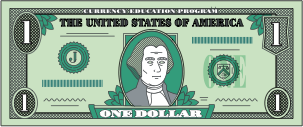 |
| Malġuk | |
| Piŋasut | |
| Sisamat | |
After that, we can think of the factors of five like:
| Tallimat | 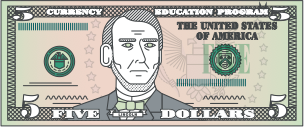 |
| Qulit | |
| Akimiaq | |
Once again, Itchaksrat is an exception, meaning one five-dollar bill and one one-dollar bill.
We can use this model to help keep the words straight when we explore the next place value of the Iñupiaq counting system.
Practice
Use levels 1 and 2 in the language mode of the app below to practice the first twenty words for numbers. Click here to open the program in a new window.
References:
Maclean, E. A. (2014). Iñupiaq to English Dictionary. University of Alaska Press.